


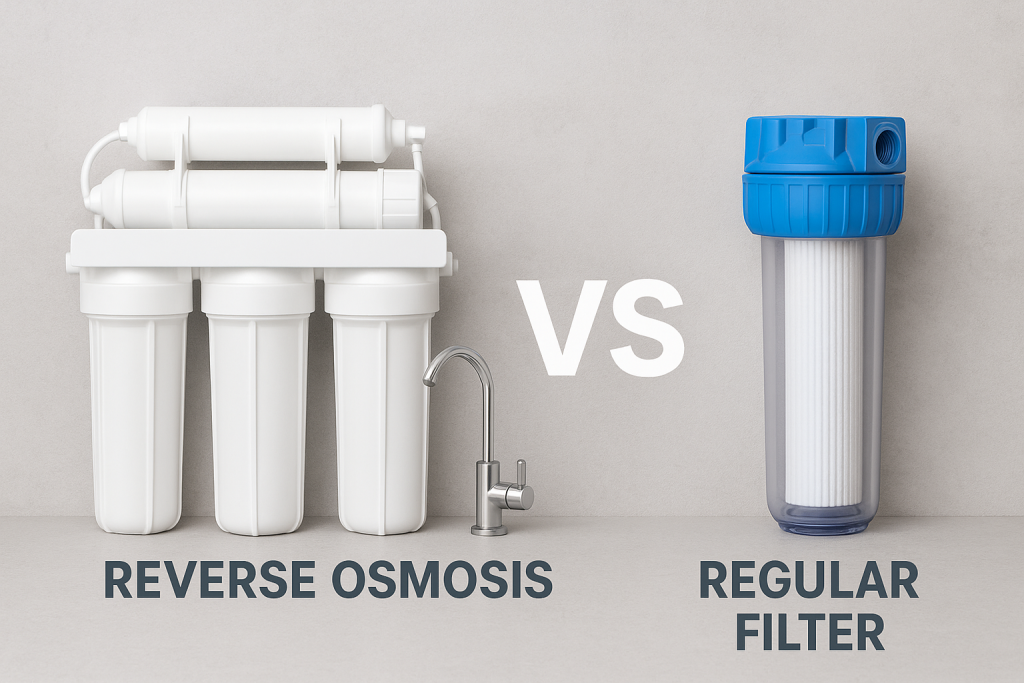
Trying to settle the reverse osmosis vs water filter NZ question before you buy?
A standard water filter is the right call if you are mainly dealing with chlorine taste, sediment, or general odour in your tap water. Reverse osmosis (RO) is worth the extra investment if you are after the cleanest possible drinking water, need to remove dissolved contaminants like nitrates or heavy metals, or are on tank water and want an extra layer of assurance. We will unpack why below and give you a side-by-side comparison so you are not left guessing.
Finding the right water filter for your home comes down to what is in your water, what you are trying to fix, and how much you are willing to spend on both the system and its upkeep. Let’s walk you through it.
What a Standard Water Filter Actually Does
Carbon and sediment filters do the heavy lifting in most New Zealand homes, and the mechanics behind them are fairly straightforward. Water passes through a physical or chemical barrier that catches particles and pulls certain compounds out of solution. Activated carbon is brilliant at this job, especially when the complaint is a chlorine taste, a faint musty smell, or water that looks slightly cloudy after heavy rain.
Nothing about installing one of these systems requires a plumber to pull your kitchen apart. Most homeowners fit them themselves in an afternoon, and swapping the cartridge every three to six months is about as involved as the maintenance gets. If your water supply is treated municipal water and your main gripe is the chlorine smell or a slightly off taste, this style of filtration will likely sort you out without breaking the bank. Our chlorine and fluoride reduction systems are a popular starting point for exactly this scenario.
What standard filtration will not do is remove dissolved solids such as salts, nitrates, fluoride, or heavy metals at a molecular level. It is designed to improve water quality, not to strip it down to its purest form.
What Reverse Osmosis Brings to the Table
Push water hard enough against a semi-permeable membrane and something interesting happens: dissolved minerals, bacteria, and a long list of chemical contaminants get left behind, unable to squeeze through pores that fine. That is reverse osmosis in a nutshell, and it goes well beyond anything a standard cartridge can manage. Bundle in the pre-filter and post-filter stages that most RO units ship with, and you end up with sediment removal, carbon filtration, and membrane filtration all working together under one system.
Bore water and tank water are where RO tends to earn its keep, mainly because contaminant levels on those supplies can swing around unpredictably. Installing a reverse osmosis water filter is also popular with families who want the extra assurance of near-distilled quality water on tap, whether that is for the morning coffee, cooking dinner, or mixing up a bottle for the baby. The trade-off is that RO systems produce some wastewater during the filtration process, need a dedicated tap or connection point, and generally cost more upfront than a standard setup. Our reverse osmosis systems range covers both compact under-bench units and larger systems for whole-property use.
Reverse Osmosis vs Water Filter NZ: The Quick Answer
When Kiwi customers ask us to settle the reverse osmosis vs water filter NZ debate, we usually start by asking about their water source. Does the town supply decent-quality water, or is there a taste or odour complaint? Standard filtration should do the trick. Tank, well, or bore water, or a household with specific health concerns around dissolved contaminants? RO is the safer bet. If you are unsure what is actually in your water, a simple test kit takes the guesswork out of it before you commit to either system.
Comparison Table
| Feature | Standard Filter | Reverse Osmosis |
|---|---|---|
| Removes chlorine and odour | Yes | Yes |
| Removes sediment | Yes | Yes |
| Removes dissolved salts and nitrates | No | Yes |
| Removes fluoride | Partial | Yes |
| Upfront cost | Lower | Higher |
| Ongoing maintenance | Cartridge swap every 3 to 6 months | Membrane and pre/post filter changes annually |
| Water wastage during filtration | Minimal | Some wastewater produced |
| Installation complexity | Straightforward | Requires a dedicated tap or plumbing point |
| Best suited for | Town supply, taste, and odour issues | Tank, bore water, or maximum purification |
Cost and Maintenance
Price is often the deciding factor, and fair enough, too. A standard water filter system will generally set you back less initially, and the ongoing running costs are lower, since you are only replacing one or two cartridges a handful of times each year. An RO system costs more to buy and install, and the membrane itself usually needs replacing annually alongside the pre- and post-filters, so budget for a bit more in yearly upkeep.
That said, we would not call RO an unnecessary splurge. If your water quality genuinely warrants it, the investment pays for itself, particularly for households with young children, elderly residents, or anyone managing a health condition where water purity matters. For everyone else, a standard filter comparing favourably against reverse osmosis on cost alone is often reason enough to start there and upgrade later if needed.
If you are on rural or tank water and want the full picture of what your supply needs, our whole-house and tank systems collection is worth a browse, since these setups often combine sediment, carbon, and sometimes UV stages before water even reaches the tap.
Making the Call for Your Household
Choose a standard filter if your water comes from a town supply, tastes or smells slightly off due to chlorine, and you want an affordable, low-maintenance fix.
Choose reverse osmosis if you are on tank, bore, or well water, want to remove dissolved contaminants that standard filtration cannot touch, or want the highest achievable water purity for drinking and cooking.
Not sure which camp you fall into? Testing your water first is the sensible move rather than guessing your way through a reverse osmosis vs standard filtration decision. It tells you exactly what you are dealing with, which then makes choosing between the two options far less of a shot in the dark.
FAQs
Is reverse osmosis better than a standard water filter?
Not necessarily better in every case, just different in scope. RO removes a wider range of contaminants, including dissolved solids, while a standard filter focuses on chlorine, taste, and sediment. Which one is “better” depends entirely on what is in your water to begin with.
How often do I need to change filters in each system?
Standard cartridges are usually good for three to six months before they need to be swapped out. RO systems ask a bit more of you: expect to change the pre- and post-filters somewhere between six and twelve months, while the membrane itself can often run for one to two years before it needs replacing, depending on how hard your water source works it.
Can I install a reverse osmosis system if I already have a standard filter?
Yes, many households run both. A standard filter as a pre-treatment stage protects the RO membrane from sediment and chlorine, extending its lifespan considerably.
Is reverse osmosis overkill for town supply water?
For most town supply households, a standard filter is sufficient. RO becomes more valuable when supply is inconsistent, sourced from a tank or bore, or when a resident has specific health reasons to want maximum purification.
What is the real difference between reverse osmosis and water filters in the NZ context, specifically?
New Zealand’s water sources vary a lot between town supply, rural bore water, and rainwater tanks, so the right system genuinely depends on where you live. Town-supplied households usually do fine with standard filtration, while rural and tank-fed properties tend to benefit more from RO.
Still weighing up which system your place suits? The team at Water Filters Online is always happy to talk through your specific water source and usage before you commit to anything. Reach out, and we will help you land on the setup that actually makes sense for your household, not just the one with the biggest price tag.