


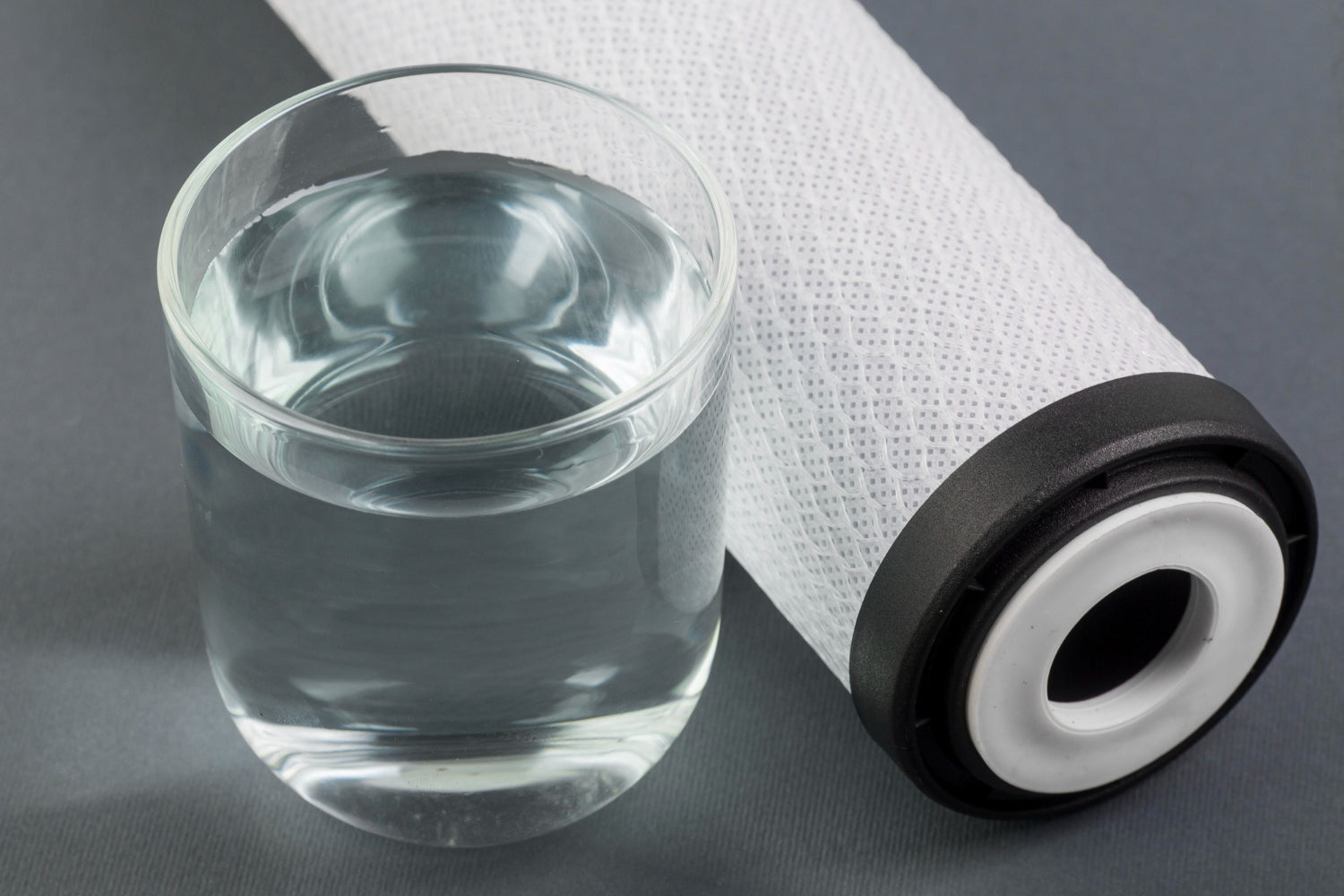
You will hear it almost everywhere once you start looking into water filters. Someone will say a 0.5 micron filter is what you need, and the conversation usually stops there, as if that number alone settles everything.
At some point, that idea became accepted as fact. Not questioned, not explained, just repeated. The strange part is that most people using it do not really know what that number means in practice, or what it does not cover.
At Water Filters Online, we see this play out all the time. People come in asking specifically for “0.5 micron” systems, assuming that is the safest or most complete option available. In reality, that number tells only a small part of the story, and sometimes not even the most important part.
Where the 0.5 Micron Idea Came From
If you go back a few decades, water filtration started becoming more visible in homes across New Zealand. Along with that came technical language that sounded precise and reassuring. Terms like micron ratings, sub-micron filtration, and laboratory-grade purity began showing up in brochures and retail displays.
The message was simple and easy to remember. Smaller microns meant smaller particles could be removed. Smaller particles sounded more dangerous. So smaller numbers must mean better filtration.
From there, 0.5 micron became the sweet spot that stuck in people’s minds. It sounded advanced without being too abstract, and it gave sales teams something concrete to point at. The problem is that this framing quietly ignored how filtration actually works in the real world.
What a Micron Rating Actually Tells You
A micron rating is just a measure of particle size. It tells you the approximate size of particles a filter can physically catch. That is useful, but only within a narrow context.
It does not tell you what contaminants are being targeted. It does not tell you how the filter behaves over time. It does not tell you how effective the media is at chemical removal.
Two filters with the same micron rating can perform very differently depending on what they are made of and how they are constructed. A carbon block filter at 0.5 micron behaves very differently from a sediment filter at 0.5 micron, even though the number is the same.
This is where the assumption starts to fall apart. The number looks scientific, but it is not a complete measure of performance.
The Difference Between Nominal and Absolute
This is one of the parts that rarely gets mentioned in marketing, but it changes how you read any micron rating.
A nominal rating means the filter captures a percentage of particles at that size, often around 85 percent. An absolute rating means it captures nearly all particles at that size.
So when someone says “0.5 micron”, the next question should be what kind of 0.5 micron that actually is. Without that context, the number alone does not tell you much.
This is one of the reasons the idea became so sticky. It sounds precise, but it leaves out just enough detail to be misunderstood.
Why 0.5 Micron Does Not Solve Everything
Different contaminants behave in different ways, and not all of them are removed by size alone.
Chlorine, for example, is not removed because it is larger than 0.5 microns. It is removed because carbon media absorbs it chemically. The same applies to taste, odour, and many organic compounds.
Bacteria and cysts are size-based, so micron rating matters more there. But even then, flow rate, contact time, and filter design all influence the outcome.
Fluoride, dissolved metals, and some chemical contaminants are not reliably removed by standard carbon filters at all, regardless of micron rating.
So when a system is chosen based only on “0.5 micron”, it often misses the actual problem the user is trying to solve.
How Marketing Made the Idea Stick
The reason this belief has lasted so long is not that it is completely wrong. It is because it is simple, and simple ideas are easy to repeat.
Retail environments favour quick explanations. Sales conversations need to be clear and memorable. “0.5 micron” became a shorthand that felt technical without requiring deeper explanation.
Over time, that shorthand turned into a rule of thumb, and then into something closer to a myth.
Once that kind of idea takes hold, it tends to stay there, especially when most people do not have a reason to question it.
What Actually Matters When Choosing a Filter
If you step back from the number and look at how systems are built, a different picture starts to form.
The type of media matters more than the micron rating alone. Carbon block, GAC, ceramic, and specialised media all behave differently.
The problem you are solving matters just as much. Removing chlorine is not the same as dealing with bacteria, and neither is it the same as adjusting pH or reducing scale.
The way the system is set up also plays a role. Multi-stage systems often perform better because each stage handles a specific job rather than trying to do everything at once.
Flow rate, contact time, and maintenance all influence performance in ways that a single number cannot describe.
A More Practical Way to Look at Filtration
Instead of starting with micron size, it makes more sense to start with the water itself.
What does it taste like? What source is it coming from? What issues are actually present?
From there, the right combination of filtration methods can be selected. Sometimes that includes a fine carbon block filter. Sometimes it includes sediment pre-filtration or additional stages for specific contaminants.
The goal is not to chase the smallest number. It is to match the system to the job.
Why This Still Matters Today
The 0.5 micron idea is still circulating, and in some cases, it still shapes how people choose filters. That is not necessarily harmful on its own, but it can lead to systems that do not fully address the problem at hand.
Water filtration has moved well beyond single-metric thinking. Modern systems are built around combinations of media, staged filtration, and application-specific design.
Understanding that shift helps you make better decisions and avoid relying on a number that was never meant to carry that much weight.
Final Thoughts
The idea that 0.5 micron filtration is the ultimate solution did not come from bad science. It came from simplifying a complex topic into something easier to sell. That simplification worked, but it also left out the context needed to make informed choices.
At Water Filters Online, the focus is less on chasing a specific micron number and more on helping people understand what their water actually needs. Once that part is clear, the right system usually becomes obvious. Because in the end, good filtration is not about one number. It is about how everything works together.
FAQs
1. Is a 0.5 micron water filter the best option?
Not always. A 0.5 micron filter can remove fine particles, but it does not cover all contaminants. The right choice depends on what is in your water.
2. What does 0.5 micron actually mean in filtration?
It refers to the size of particles the filter can trap. It does not indicate how well the filter removes chemicals, chlorine, or dissolved substances.
3. Are all 0.5 micron filters the same?
No. Performance depends on the filter type, media, and whether the rating is nominal or absolute. Two filters with the same rating can behave very differently.
4. Does a smaller micron rating mean better filtration?
Not necessarily. Smaller micron ratings target smaller particles, but filtration performance also depends on media type, contact time, and system design.
5. Can a 0.5 micron filter remove bacteria?
Some can reduce certain bacteria and cysts, but it depends on the filter design and rating type. It should not be relied on alone for full biological protection.
6. What should I look for instead of micron size?
Focus on what problem you are solving. Consider the filter media, system setup, and specific contaminants in your water rather than relying on a single number.